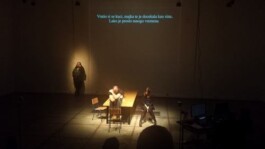
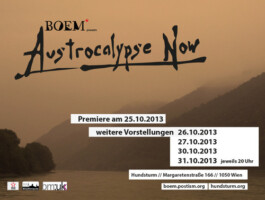
Play, 55 mins, performances in Vienna, Belgrade, Pančevo, 2013
In collaboration with: Theater am Hundsturm, BMUKK, Verein Stadtimpuls
Starring: Jimi Lend, Oktay Günes, Ana Stefanovic-Bilic, Christoph Fellner and others
Directed by: Alexander Nikolic, Michael Kalivoda – (BOEM*)
More than 200,000 residents of Vienna were directly or indirectly affected by the war in the former Yugoslavia. Join the BOEM* collective and their theatre performance as they immerse you in an unknown post-war world – between the Ottakring suburbs and the Hundsturm in Margareten.
Many Viennese were and are directly affected by the war in the former Yugoslavia. Few can speak of it, for the medium of language is limited, and resembles a ‘Trojan horse’ that colonises the subjects and sometimes expresses more through silence. Above all, however, language is that medium which, whilst on the one hand helping to speak of the trauma, on the other hand traumatises through the act of speaking itself and manifests ethnic boundaries. Many languages are spoken in the Boem, in the Boem of the working classes, in the Boem of the ‘educated’. A wide variety of dialects that assign subjects their place.
Over the last 20 years, synchronisation has been the order of the day among our southern neighbours. In step towards national identity. Civil war draws the line between ‘us’ and ‘them’. Everything is subordinated to the war, and any norm deviating from the prescribed aesthetic is perceived as disruptive, and often combated. It endangers the synchronised, conformist community.
“The city is at war. Where will they come from? The bridge here needs to be blown up. A checkpoint there. Yes, that looks high enough for a sniper. We cannot defend this part of the city. Mines would be appropriate, perhaps a little further forward, two or three as a diversion; they can find those, but the others will hold them up for a few hours. They’ll be here soon.”
50.000 protagonista jugoslovenskih ratova živi u Beču. Na svako odupiranje nacionalnom identitetu, tamo se je gledalo se kao na izdaju. Podeliti svoje iskustvo je težak proces, a jezik je nalik trojanskom konju koji kolonizuje subjekte. Govor može da traumatizuje i da oda etničku pripadnost. U Boem*u se govori jezikom edukovanih, jezikom radničke klase i raznim dijalektima koji subjektima određuju njihovo mesto.
U poslednjih dvadeset godina na dnevnom redu je sinhronizacija. Građanski rat povlači granicu između sebe i drugog, tuđeg. Sve se podređuje ratu, tuđa i kontradiktorna estetika tumači se kao napad na celinu i pokreće odlučan otpor protiv takvih estetika, jer prete sinhronizovanoj i ujednačavajućoj zajednici.
„Grad je u ratu. Odakle dolaze? E, ovaj most bi morali srušiti. A ovde punkt. Da, ovaj položaj je dovoljno visok za snajper. Ovaj deo grada nećemo moći braniti. Tu ćemo sve minirati. Dve ili tri tako postaviti da ih vide, ove ostale krijemo, to će ih usporiti nekoliko sati. Brzo će oni doći.“
Nakon predstave održaće se okrugli sto “Lokalizacija ličnog iskustva”
Tekst je inspirisan intervjuima sa ratnim veteranima u Srbiji i u Beču
Priredio: Aleksander Nikolić
Glumci: Ana Stefanović Bilić, Oktay Günes, Jimi Lend
Režija: Kolektiv Boem*
Scena: Nikolić i Kalivoda
Zvuk: Christoph Fellner
Trajanje: 55 minuta
Play, 55 mins, performances in Vienna, Belgrade, Pančevo, 2013
In collaboration with: Theater am Hundsturm, BMUKK, Verein Stadtimpuls
Starring: Jimi Lend, Oktay Günes, Ana Stefanovic-Bilic, Christoph Fellner and others
Directed by: Alexander Nikolic, Michael Kalivoda – (BOEM*)
More than 200,000 residents of Vienna were directly or indirectly affected by the war in the former Yugoslavia. Join the BOEM* collective and their theatre performance as they immerse you in an unknown post-war world – between the Ottakring suburbs and the Hundsturm in Margareten.
Many Viennese were and are directly affected by the war in the former Yugoslavia. Few can speak of it, for the medium of language is limited, and resembles a ‘Trojan horse’ that colonises the subjects and sometimes expresses more through silence. Above all, however, language is that medium which, whilst on the one hand helping to speak of the trauma, on the other hand traumatises through the act of speaking itself and manifests ethnic boundaries. Many languages are spoken in the Boem, in the Boem of the working classes, in the Boem of the ‘educated’. A wide variety of dialects that assign subjects their place.
Over the last 20 years, synchronisation has been the order of the day among our southern neighbours. In step towards national identity. Civil war draws the line between ‘us’ and ‘them’. Everything is subordinated to the war, and any norm deviating from the prescribed aesthetic is perceived as disruptive, and often combated. It endangers the synchronised, conformist community.
“The city is at war. Where will they come from? The bridge here needs to be blown up. A checkpoint there. Yes, that looks high enough for a sniper. We cannot defend this part of the city. Mines would be appropriate, perhaps a little further forward, two or three as a diversion; they can find those, but the others will hold them up for a few hours. They’ll be here soon.”
50.000 protagonista jugoslovenskih ratova živi u Beču. Na svako odupiranje nacionalnom identitetu, tamo se je gledalo se kao na izdaju. Podeliti svoje iskustvo je težak proces, a jezik je nalik trojanskom konju koji kolonizuje subjekte. Govor može da traumatizuje i da oda etničku pripadnost. U Boem*u se govori jezikom edukovanih, jezikom radničke klase i raznim dijalektima koji subjektima određuju njihovo mesto.
U poslednjih dvadeset godina na dnevnom redu je sinhronizacija. Građanski rat povlači granicu između sebe i drugog, tuđeg. Sve se podređuje ratu, tuđa i kontradiktorna estetika tumači se kao napad na celinu i pokreće odlučan otpor protiv takvih estetika, jer prete sinhronizovanoj i ujednačavajućoj zajednici.
„Grad je u ratu. Odakle dolaze? E, ovaj most bi morali srušiti. A ovde punkt. Da, ovaj položaj je dovoljno visok za snajper. Ovaj deo grada nećemo moći braniti. Tu ćemo sve minirati. Dve ili tri tako postaviti da ih vide, ove ostale krijemo, to će ih usporiti nekoliko sati. Brzo će oni doći.“
Nakon predstave održaće se okrugli sto “Lokalizacija ličnog iskustva”
Tekst je inspirisan intervjuima sa ratnim veteranima u Srbiji i u Beču
Priredio: Aleksander Nikolić
Glumci: Ana Stefanović Bilić, Oktay Günes, Jimi Lend
Režija: Kolektiv Boem*
Scena: Nikolić i Kalivoda
Zvuk: Christoph Fellner
Trajanje: 55 minuta

